
Green Tea vs Matcha – Which is Better for Weight Loss?| Click Here For Green Tea
Green Tea vs Matcha – Which is Better for Weight Loss?| Click Here For Matcha
Which is Better for Weight Loss?| Green Tea vs Matcha
Green Tea vs Matcha – Which is Better for Weight Loss?
If your goal is weight management with minimal effort and cost, regular green tea is the simplest starting point. If you want a stronger antioxidant and caffeine hit per cup, faster prep for smoothies/latte style drinks, and don’t mind the higher price, matcha offers a more concentrated effect. For cutting calories and staying consistent, the best choice is the one you’ll actually drink every day.
What’s the Difference? Green Tea vs Matcha – Which is Better for Weight Loss?
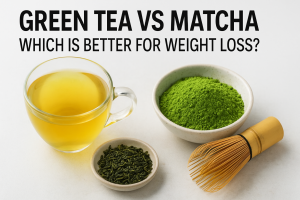
Which is Better for Weight Loss?
Green tea is made by steeping whole tea leaves in hot water. You drink the infusion and discard the leaves.
Matcha is stone-ground powder from shade-grown green tea leaves. You whisk the powder into water or milk and consume the entire leaf, so the caffeine, L-theanine, and catechins (like EGCG) are more concentrated per serving.
Why this matters for weight loss
Catechins (EGCG) may support fat oxidation and metabolic rate when paired with caffeine.
Caffeine can slightly boost energy expenditure and exercise performance.
L-theanine may smooth caffeine “jitters,” improving focus and workout adherence.
Green Tea vs Matcha for Weight Loss: Head-to-Head
| Criteria | Green Tea (Brewed) | Matcha (Powder) |
|---|---|---|
| Antioxidant density | Moderate | High (you consume the leaf) |
| Caffeine per serving | ~20–40 mg per cup | ~60–80 mg per 2 g serving |
| Satiety/Cravings | Light appetite control | Slightly stronger due to caffeine + theanine |
| Ease of use | Tea bag, steep and sip | Whisk/shake powder; easy in smoothies |
| Taste | Light, grassy | Rich, umami, can be earthy/vegetal |
| Price (India) | Budget-friendly | Premium |
| Versatility | Hot/cold tea | Tea, latte, smoothie, baking |
| Who should choose | Beginners, budget, multiple cups/day | Want stronger effect per cup; latte lovers |
Bottom line: Matcha packs more per serving; green tea wins on cost and daily habit-forming.
How They May Help With Weight Loss
1) Slight boost in calorie burn
Both drinks combine caffeine and catechins, which may temporarily increase thermogenesis (calories burned at rest). The effect is modest, so think of them as helpers to diet and exercise, not magic bullets.
2) Better workout energy and focus
A pre-workout cup can improve perceived energy and help you move more. Matcha’s higher caffeine content can feel closer to a mild pre-workout for people who prefer a natural option.
3) Lower-calorie beverage swap
Replacing sugary tea, soda, or high-calorie lattes with unsweetened green tea or matcha saves calories. Over weeks, that creates a real difference on the scale.
How to Drink for Best Results (India-friendly tips)
Brew/prepare correctly
Green tea: 70–80°C water, steep 2–3 minutes. Over-steeping makes it bitter.
Matcha: Sift ~1–2 grams (½–1 tsp). Add a little cool water to make a smooth paste, then whisk with hot (not boiling) water. No whisk? Use a shaker bottle.
Timing
Have a cup 30–60 minutes before a workout or a brisk walk.
For appetite control, sip before meals.
Avoid late evenings if caffeine disturbs your sleep.
Serving frequency
Most people do well with 2–3 cups of green tea per day, or 1 serving of matcha (sometimes 2, depending on caffeine tolerance).
Keep it calorie-light
Avoid sugar and heavy creamers. If you need flavor, try a squeeze of lemon (also helps absorption), a cinnamon stick, a few mint leaves, or stevia.
Which One Fits Your Lifestyle?
Choose Green Tea if you want:
Low cost and easy availability on Amazon India
Multiple cups through the day with milder caffeine
Classic hot/cold tea you can sip without effort
Choose Matcha if you want:
More antioxidants and caffeine per serving
A drink you can blend into smoothies or lattes
A richer, umami flavor and a “ritual” feel
Popular Ways to Use Each (No Added Sugar)
Green Tea ideas
Classic hot brew: 2–3 minutes, add lemon.
Iced green tea: Brew double strength, pour over ice.
Green tea with mint & tulsi: Cooling and refreshing for summers.
Matcha ideas
Matcha tea: 1 tsp matcha + hot water, whisk.
Matcha latte: 1 tsp matcha + hot water paste + 150–200 ml low-fat milk or unsweetened almond milk.
Matcha smoothie: Spinach, cucumber, ice, 1 tsp matcha, lemon, and stevia (optional).
Safety and Side Effects
Caffeine sensitivity: Start small. If you feel jittery, reduce serving size or switch to earlier in the day.
Acidity/ulcers/GERD: Both can irritate sensitive stomachs when taken empty. Have with a light snack.
Pregnancy/breastfeeding or on medications (especially for blood pressure or blood thinners): Speak to a doctor first.
Kidney stones (oxalates) & iron absorption: Don’t overdo. Avoid drinking with iron-rich meals; leave a 1–2 hour gap.
Buying Guide Green Tea vs Matcha – Which is Better for Weight Loss?
When shopping on Amazon India, check:
For green tea
Leaf quality: Whole leaf or pyramid bags tend to taste better than dust.
Origin & harvest notes: Freshness matters for flavor and antioxidants.
Flavored vs plain: Flavors are fine, but watch for added sugars.
For matcha
Grade: “Ceremonial” for straight tea, “Culinary” for lattes/baking.
Color: Bright spring-green powder signals freshness and proper shading.
Packaging: Light-proof, airtight tins or pouches preserve potency.
Origin: Japanese matcha is the standard; Indian green tea powders also exist—read reviews carefully.
Tip: If you’re budget-conscious, start with green tea or culinary-grade matcha for lattes and smoothies.
Sample Daily Plan for Weight Management
Morning (7–9 AM): 1 cup green tea or 1 serving matcha before breakfast.
Pre-workout (30–60 min before): If you didn’t have a morning cup, use it here.
Afternoon (2–4 PM): A second green tea to curb snack cravings.
Hydration goal: Replace one sugary beverage with tea daily.
Nutrition: Prioritize protein (dal, eggs, paneer, lean meats), vegetables, and fiber (millets, whole grains).
Movement: 8–10k steps/day + 3–4 sessions/week of strength or yoga.
FAQs Green Tea vs Matcha – Which is Better for Weight Loss?
1) Is matcha better than green tea for weight loss?
Per serving, matcha is more concentrated in catechins and caffeine, so it can feel “stronger.” But if the taste, cost, or routine doesn’t suit you, you won’t be consistent. For many people, 2–3 cups of green tea daily is easier and just as effective over time.
2) Can I drink both?
Yes. Many people use matcha in the morning and green tea later to keep caffeine moderate.
3) How long until I see results?
Think in weeks, not days. Use tea to support a calorie deficit, daily steps, and protein-rich meals.
4) What temperature is best?
Avoid boiling water. Aim for 70–80°C to protect flavor and beneficial compounds.
5) Can I have tea on an empty stomach?
If you feel acidity or nausea, switch to post-meal or add a small snack.
6) Are flavored green teas okay?
Yes, if they’re unsweetened. Watch labels for sugar or artificial sweeteners if you’re sensitive.
7) Is matcha safe every day?
Generally yes for healthy adults, in moderate amounts (1–2 servings/day). Watch caffeine intake from coffee and cola.
Pros and Cons Summary Green Tea vs Matcha – Which is Better for Weight Loss?
Green Tea
Pros: Affordable, easy to drink often, wide flavor options.
Cons: Lower potency per cup; easy to over-steep and turn bitter.
Matcha
Pros: Higher antioxidant and caffeine density; versatile in recipes.
Cons: More expensive; needs whisking or shaking; taste is stronger.
Verdict: Which Should You Buy First?
Start with green tea if you’re new to tea or on a budget. It’s the easiest habit to build, and consistent daily use beats an “ideal” drink you rarely touch.
Step up to matcha if you enjoy the flavor, want a single, more potent serving, or prefer latte/smoothie formats.
For many readers, a hybrid approach works best:
Weekdays: Green tea at work for easy sipping.
Workout or busy mornings: Matcha for a focused lift.
Final Take Green Tea vs Matcha – Which is Better for Weight Loss?
Both green tea and matcha can support a weight-loss plan, but neither replaces a calorie deficit, regular movement, and adequate sleep. If you’re cost-sensitive or new to tea, start with green tea and build the habit. If you want more potency per serving and enjoy lattes or smoothies, matcha is a great upgrade.